Newton's Three Laws
Transcript
Why do you lurch forward when a bus brakes?

Meet Isaac Newton, who explained how everything moves, from apples falling to planets orbiting.
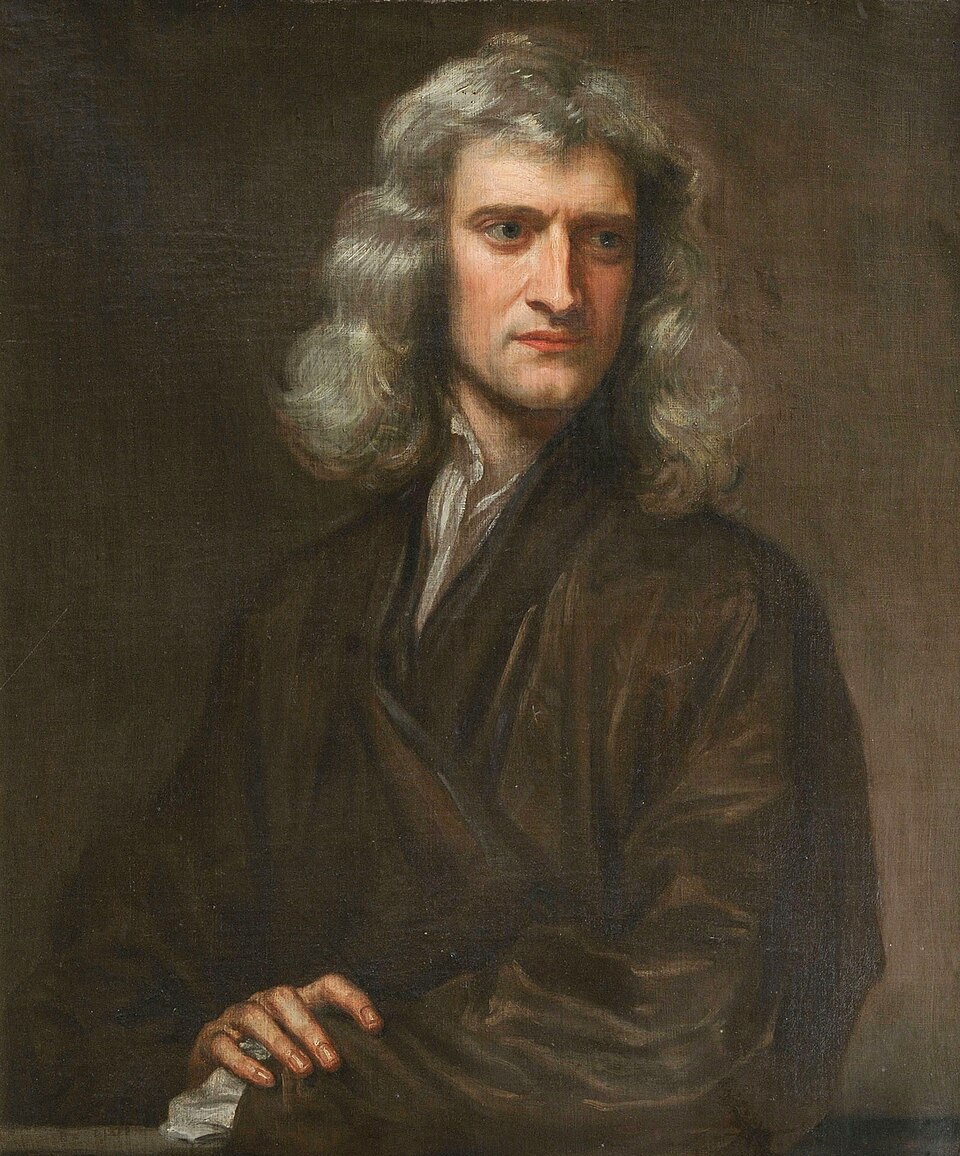
He wrote three simple laws in 1687. Together they explain pushes, pulls and motion everywhere. Law one: things keep doing what they are doing, unless a force changes it. This is called inertia.
- Law 1: Inertia

On the bus, your body wants to keep moving forward, so when the bus stops, you lurch ahead.


Law two: a bigger push gives a bigger change in motion, and a heavier object needs more push.
- Law 2: Force makes acceleration
Compare pushing an empty shopping cart with a full one. Same push, very different result.


We write this as force equals mass times acceleration.
F = m \times aWith the same force, double the mass gives half the acceleration. Watch the bars shrink as mass grows. Law three: every action has an equal and opposite reaction. Forces always come in pairs. A rocket pushes gas down, and the gas pushes the rocket up. That is law three at work.
- Law 3: Equal and opposite


Swimmers use it too. They push water backward, and the water pushes them forward.
Quick check. A big truck and a small car crash head on. Which feels the larger force? Remember: things keep moving unless pushed, force equals mass times acceleration, and every action has an equal opposite reaction.
Quick quiz
Q1. In a head-on crash, which feels the larger force?
Law three: the two forces are equal and opposite, but the car changes motion more.