Rotation in a Cycle
Transcript
How does your bicycle turn leg power into spinning wheels?
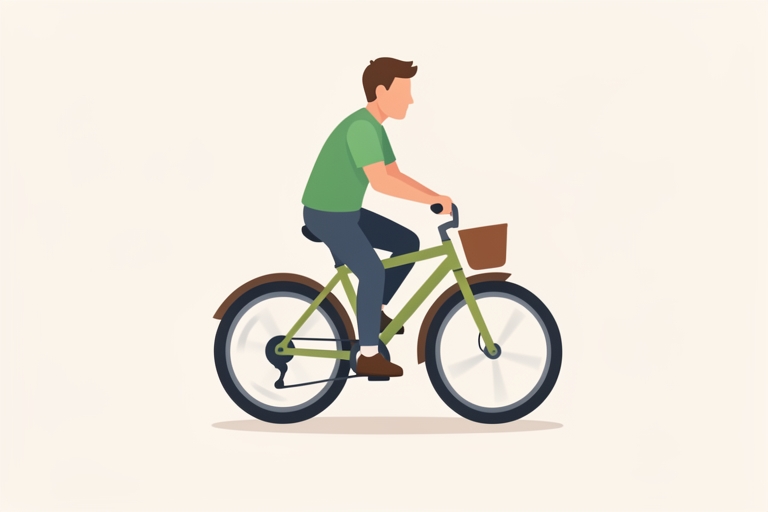
When you ride a cycle, your legs push down, and the pedals go round and round.
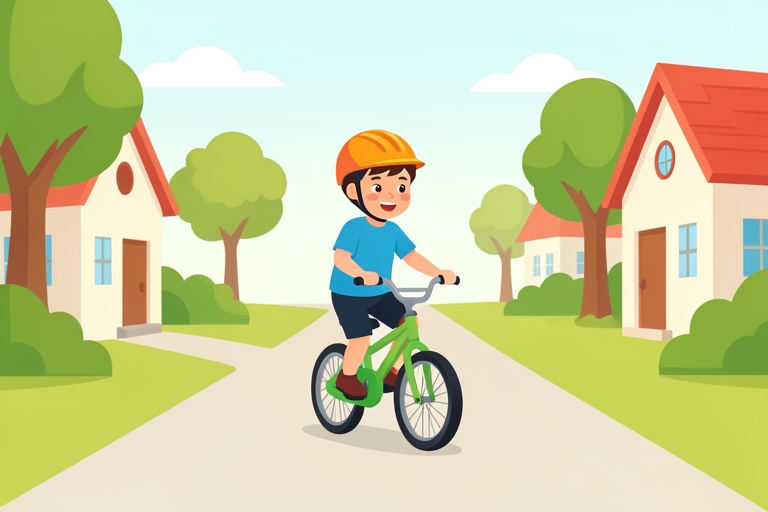
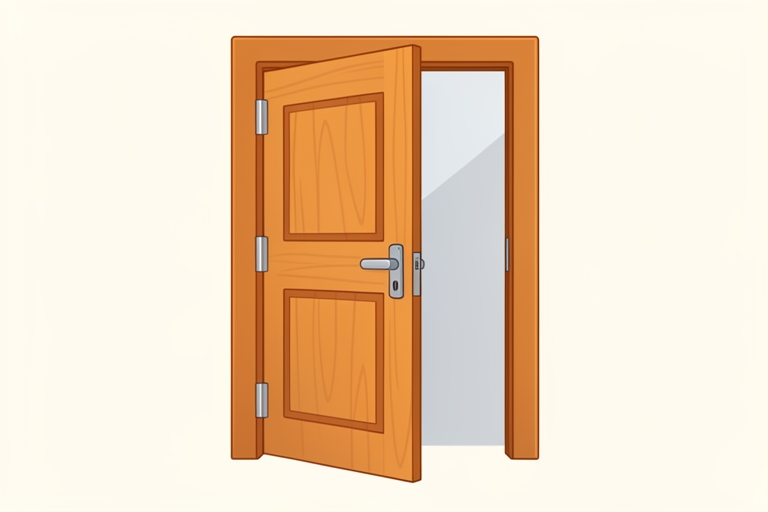
Rotation means turning around a fixed point, called the axis, like a door turning on its hinge.
- Rotation = turning around an axis

Here is the real bicycle drive, with pedals, chain, and wheel working together.
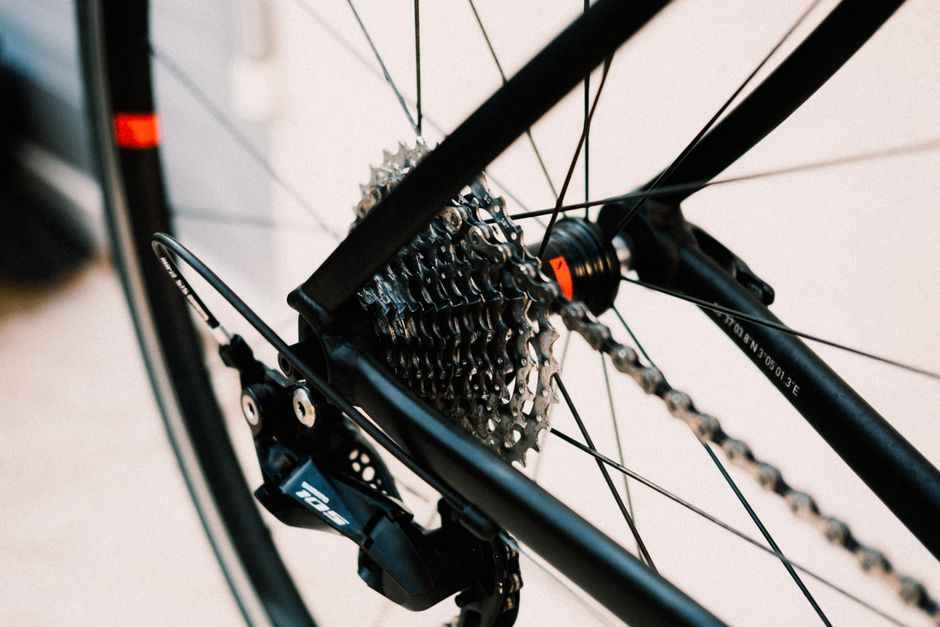
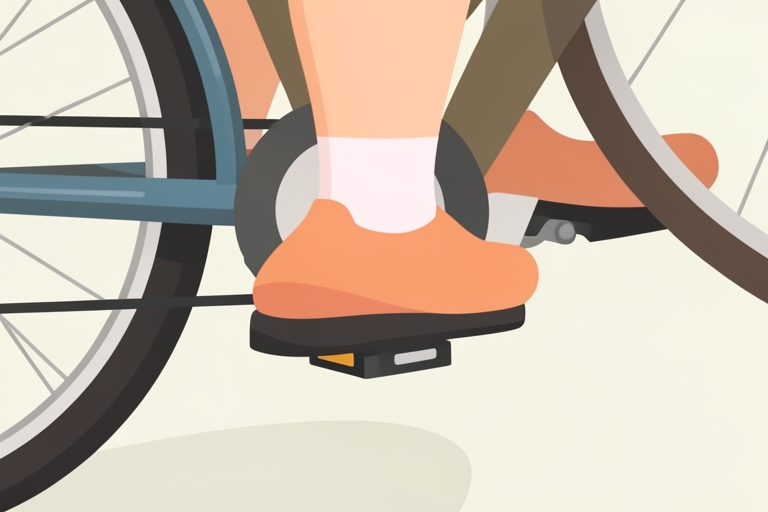
Your foot pushes the pedal, and the pedal is fixed to a crank arm that swings in a circle. The crank turns the big gear at the front, and the chain is wrapped around it.
Every step passes the turning along, so one push becomes a whole chain of rotation.
Notice something clever: your legs go up and down, but the pedals go in a circle.
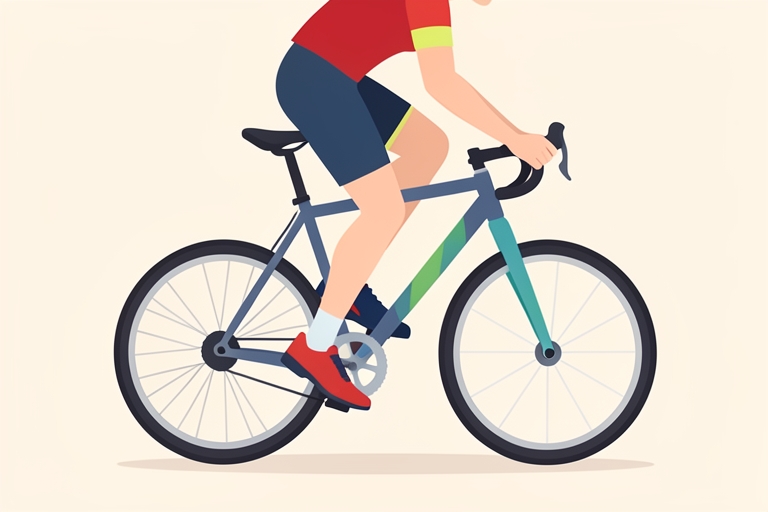
The crank changes that up-and-down push into smooth circular motion. This trick is also used in car engines.
A small gear at the back wheel is smaller, so it spins faster than the pedals. Example: if the pedal turns once and the back wheel turns three times, you travel much farther per push. Here is the full picture of how a cycle uses rotation, all in one place.
- Small gear spins faster
- 1 pedal turn = 3 wheel turns
Quick check to test what you learned. In short, your pedalling push becomes rotation that travels through the crank, gear, and chain to spin the wheel.
- Push, crank, chain, wheel spins
Quick quiz
Q1. What does the chain do on a bicycle?
The chain links the front gear to the back wheel and passes the rotation along.