Telling the time
Transcript
Let's learn to tell the time, one little hand at a time!
Clocks are everywhere: on walls, on wrists, and in classrooms. They tell us when to wake up, eat and play.
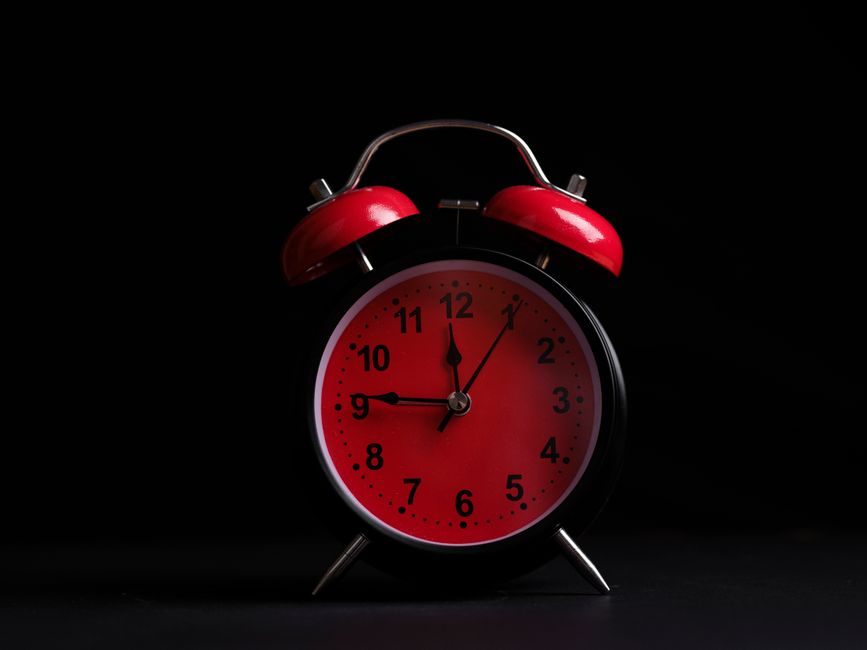
Here is a clock face. It has twelve numbers going around in a circle, from one to twelve. A clock has two hands. The short hand is the hour hand. It tells us the hour. The long hand is the minute hand. It tells us the minutes. Short is hours, long is minutes.
- Short hand = hours
- Long hand = minutes
When the long hand points straight up at the twelve, it is o'clock. Look, the short hand points at three. So this clock says three o'clock. Time to practise with another one!
Now this clock. The long hand is on twelve and the short hand points at seven. What time is it? Seven o'clock! That is the time many children eat breakfast and get ready for school.
Now the long hand can also point at the six. That means half past, because the hour is half gone. Look, the short hand sits between three and four. So this clock says half past three.
- Long hand on 6 = half past
Let's try one more. The long hand points at six, and the short hand is just past nine. That is half past nine! Great reading. Now it is your turn to try one. Look at this clock carefully. The long hand is on twelve and the short hand is on five.
Remember: the short hand shows the hour, the long hand shows the minutes. Twelve means o'clock and six means half past.
Quick quiz
Q1. What time does the clock show?
The long hand is on 12, so it is o'clock, and the short hand is on 5.