How rainbows form

Transcript
Why do rainbows only appear when the Sun is behind you?
A rainbow happens when sunlight enters a raindrop, bounces inside, and comes back out toward your eye.
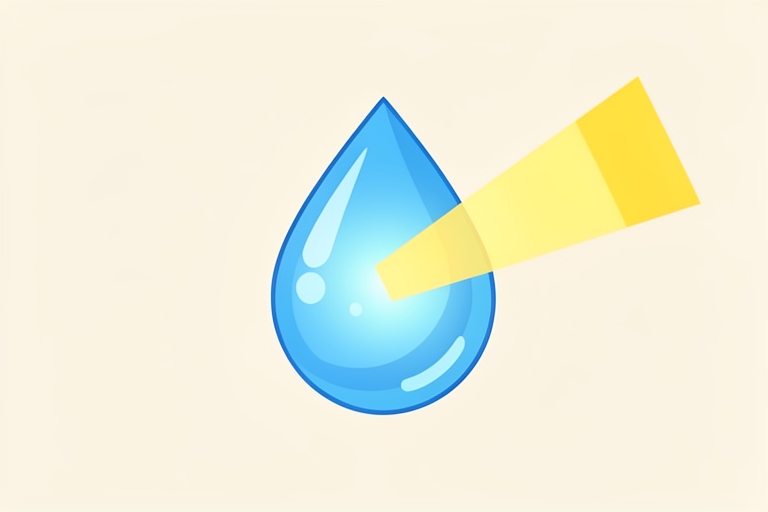
When light enters a water droplet, it bends. Each colour bends by a slightly different amount.


Inside the droplet, the light bounces off the back surface like a mirror. As the light exits the droplet, it bends again. Red exits at a different angle than violet.
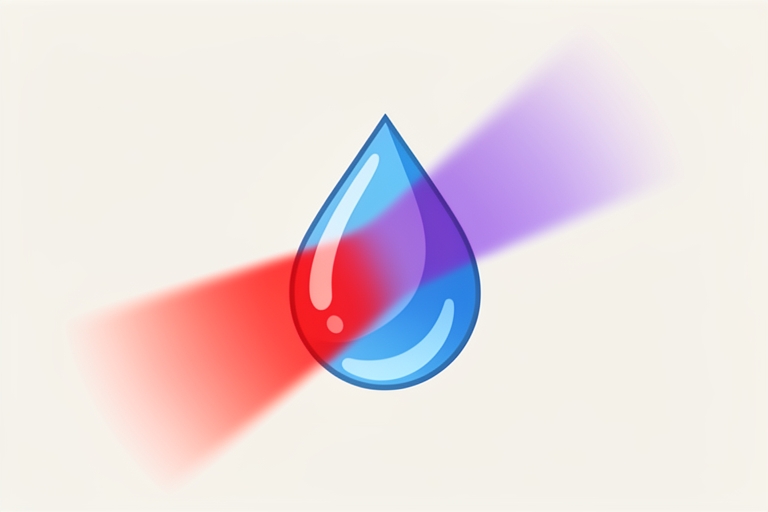
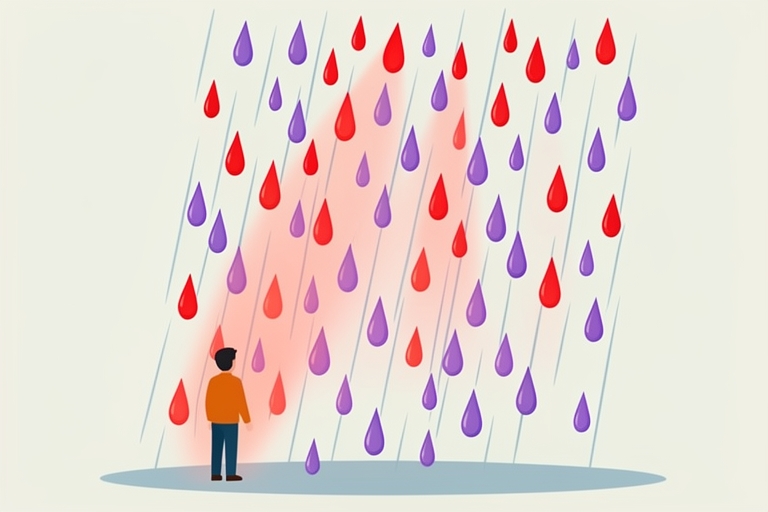
Red light exits at about 42 degrees from the incoming sunlight direction. Violet light exits at about 40 degrees, a smaller angle. So red always appears on the outside of the rainbow arc, and violet on the inside.
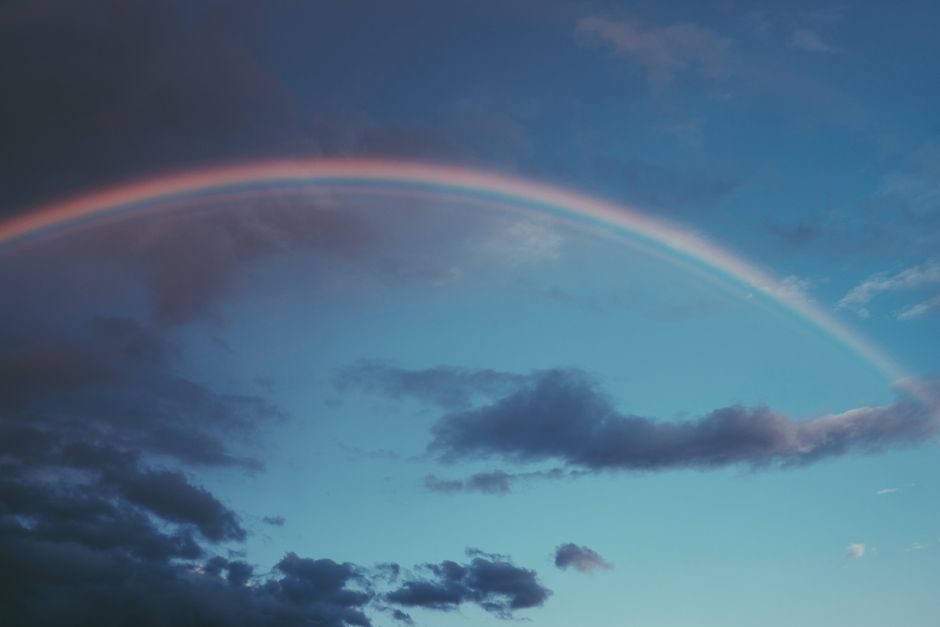
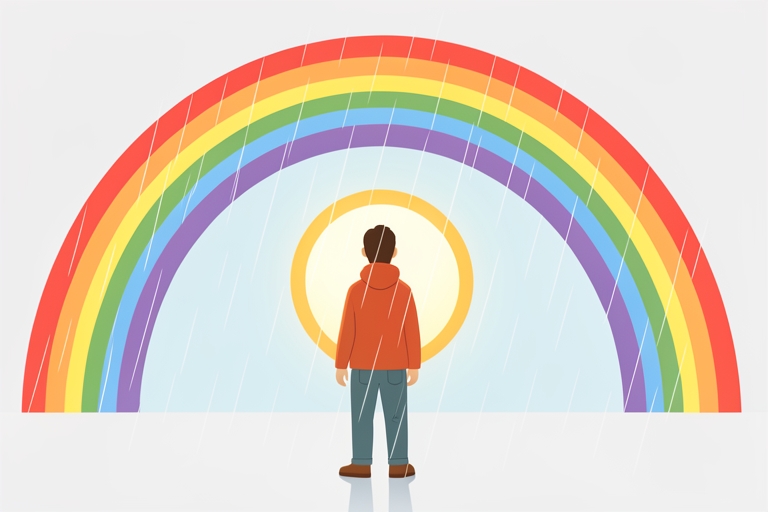
The rainbow is always opposite the Sun. If the Sun is behind you, the rainbow is in front of you.

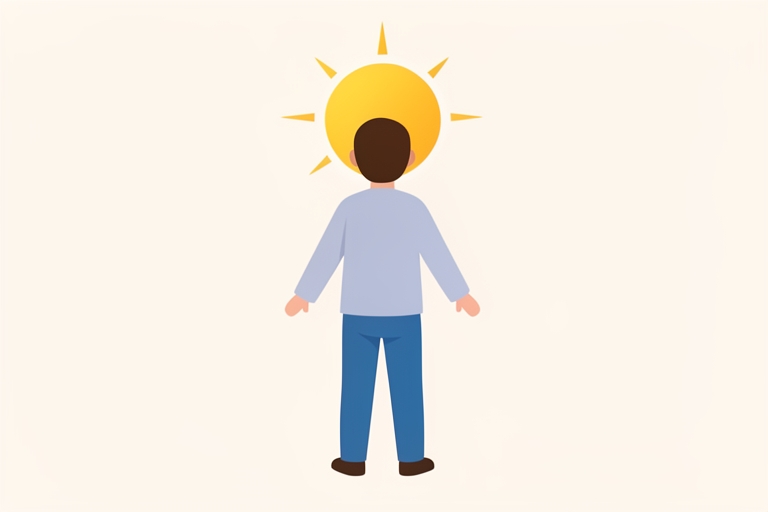
The centre of the rainbow arc is always on a straight line from the Sun through your eye.
Sometimes you see a second, fainter rainbow outside the first one, about 10 degrees further out. This happens when light bounces twice inside the droplet instead of once. Here is a real example: you are standing in a garden with the Sun behind you at 4 p.m.
- Primary and secondary arcs
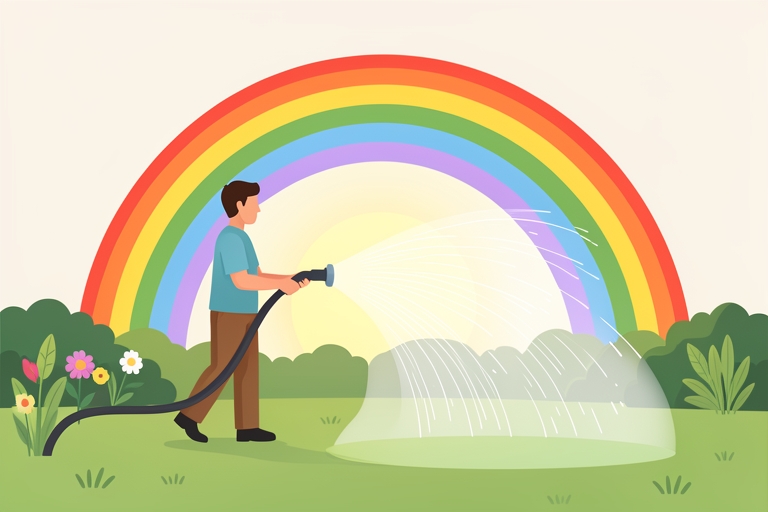
Rainbows form when sunlight refracts, reflects inside water droplets, and refracts again, separating colours by angle.