Why ice floats
Transcript
Why does a solid block of ice float on water?
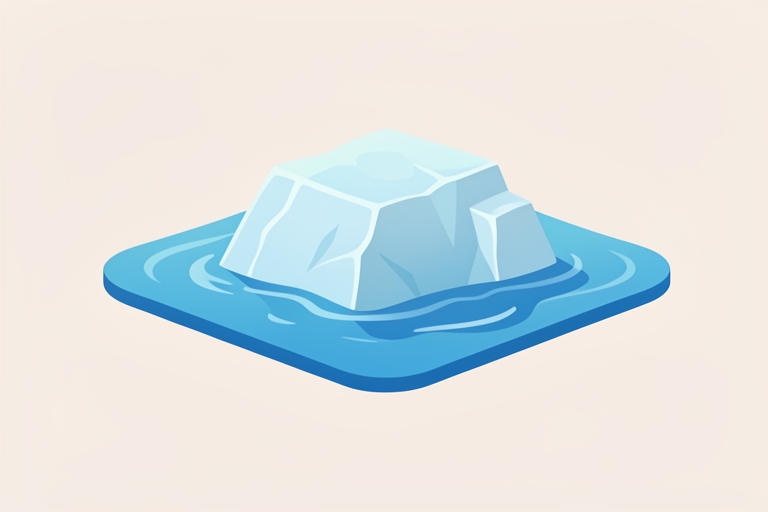
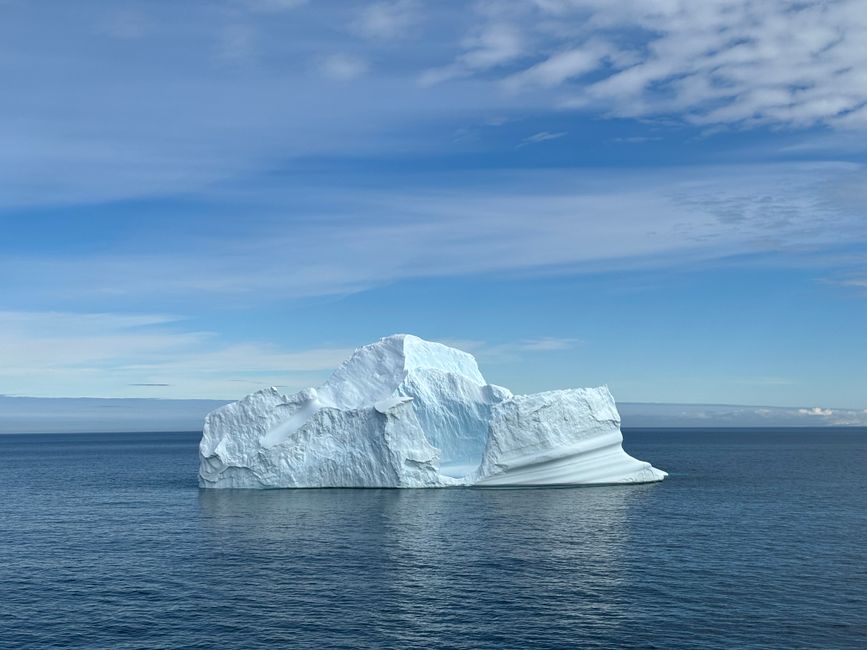
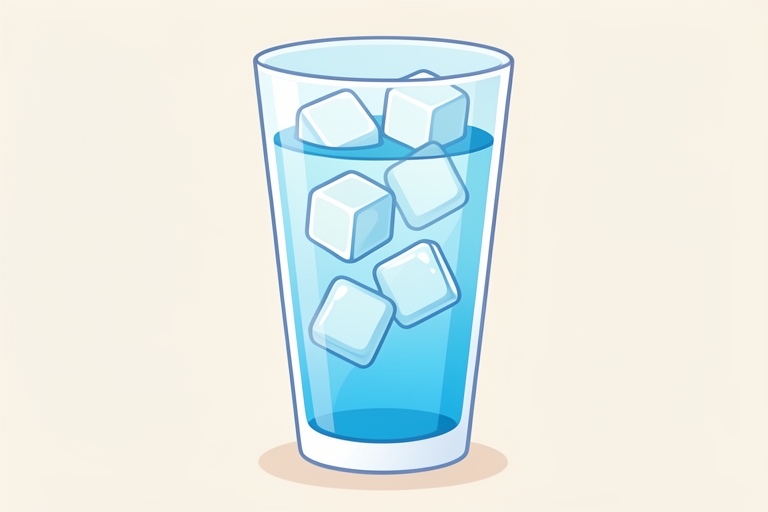
Look at an iceberg bobbing in the sea, and a glass of ice cubes floating in a drink.
Most things get smaller and heavier when they freeze, so you might expect ice to sink.
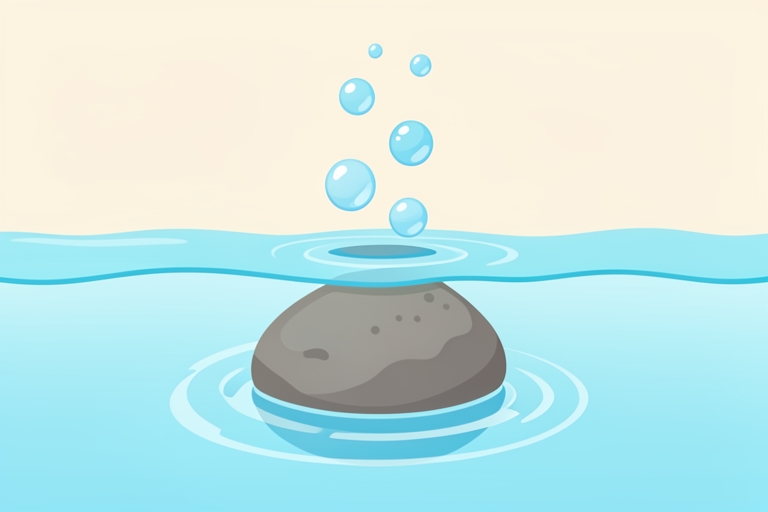
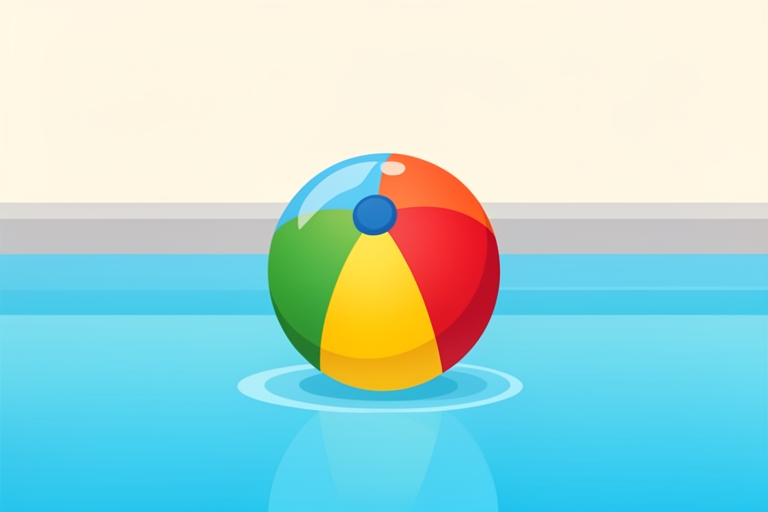
Floating depends on density, which means how much stuff is packed into a space.

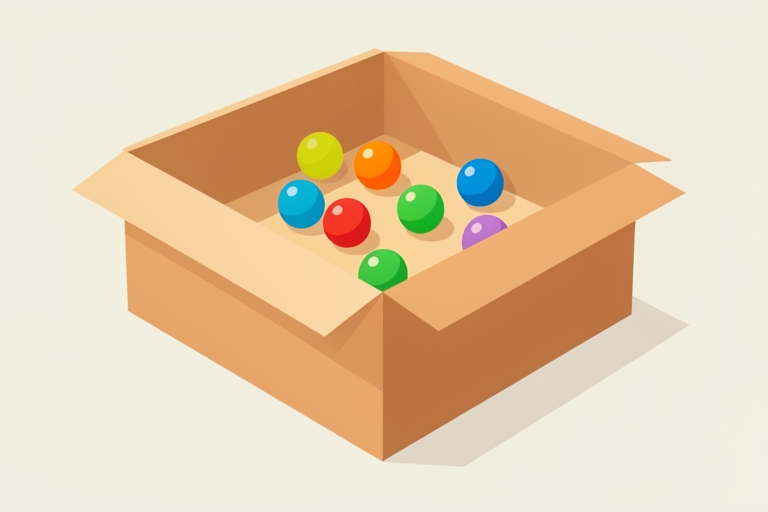
Dense things sink, and less dense things float on top.
Water is made of tiny molecules, and in liquid water they jostle around and sit close together. When water freezes, the molecules lock into a neat pattern with gaps between them. Those gaps mean the same molecules take up more room, so ice is about nine percent bigger.
Same amount of stuff, more space, so ice is lighter than the same amount of liquid water. Here is the key idea in numbers: a bucket of liquid water is heavier than the same bucket of ice.
- Ice is less dense than water
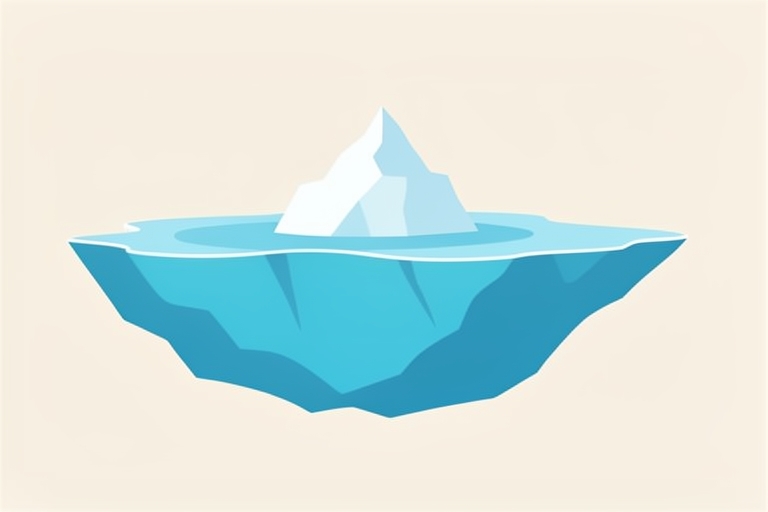
So the lighter ice gets pushed up by the water and floats, with most of it just below the surface.

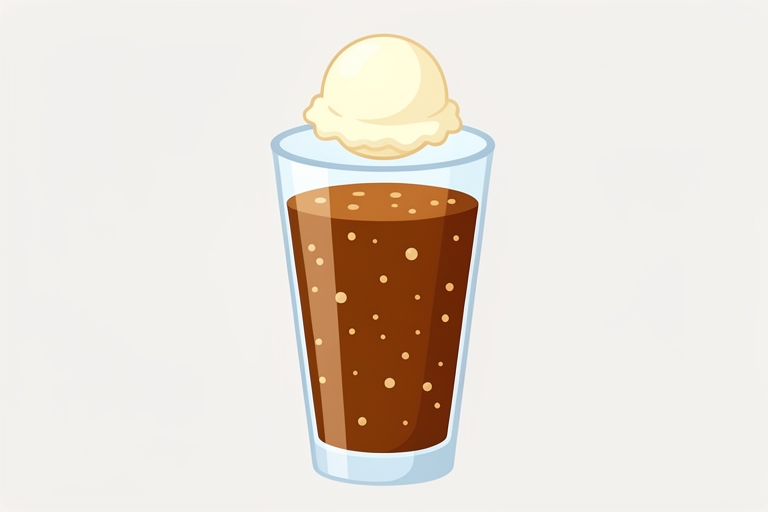
This is why a soda float works too: the ice cream is lighter, so it bobs at the top.

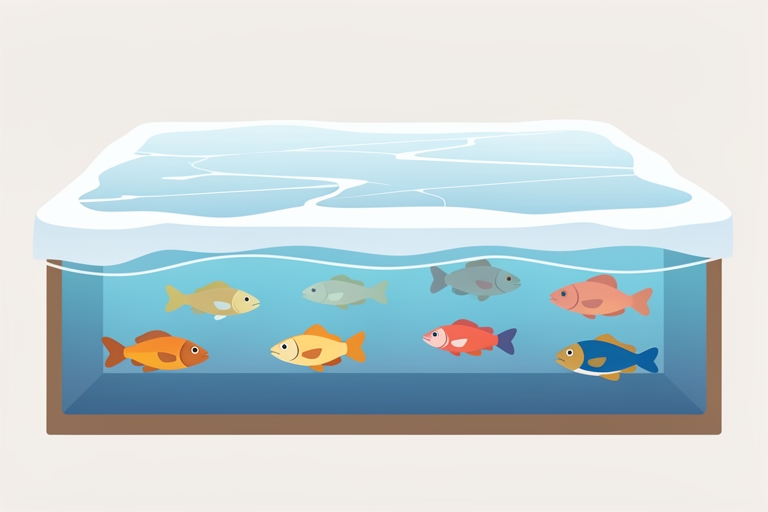
This matters for nature, because lakes freeze from the top, and fish live safely in the liquid water below.
Quick check: why does ice float on water? So, ice floats because freezing spreads water molecules apart, making ice less dense than liquid water.
- Freezing spreads molecules: ice floats!
Quick quiz
Q1. Why does ice float on water?
Freezing spreads the molecules out, so ice is less dense and floats.