How a motor works
Transcript
How does electricity make things spin?

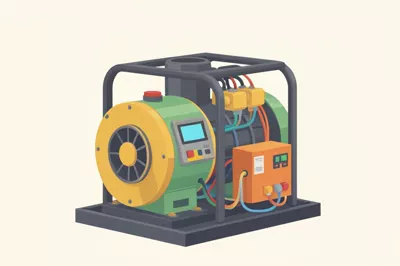
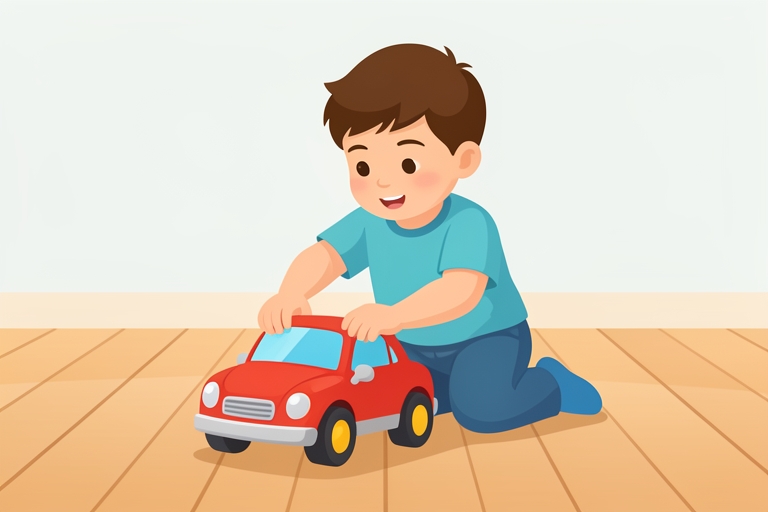
A motor is a machine that turns energy into movement, like in a fan, a toy car or a mixer.
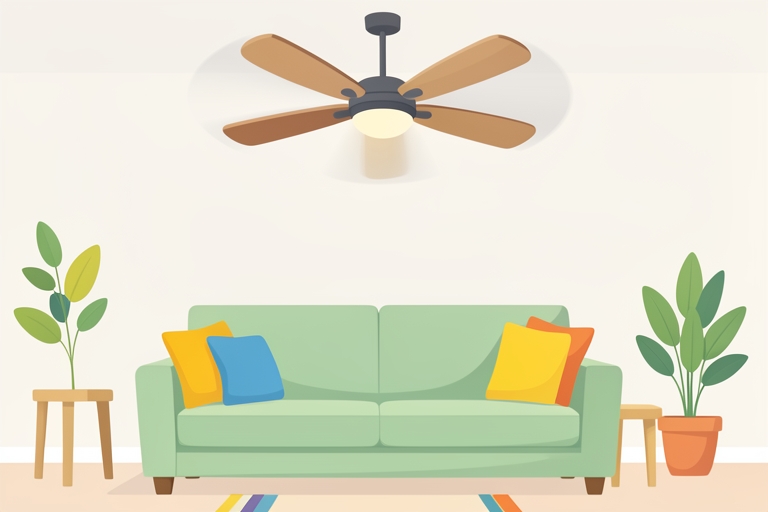
Most small motors run on electricity. Electricity goes in, and spinning movement comes out.
The secret is a magnet. Magnets push and pull each other without even touching.
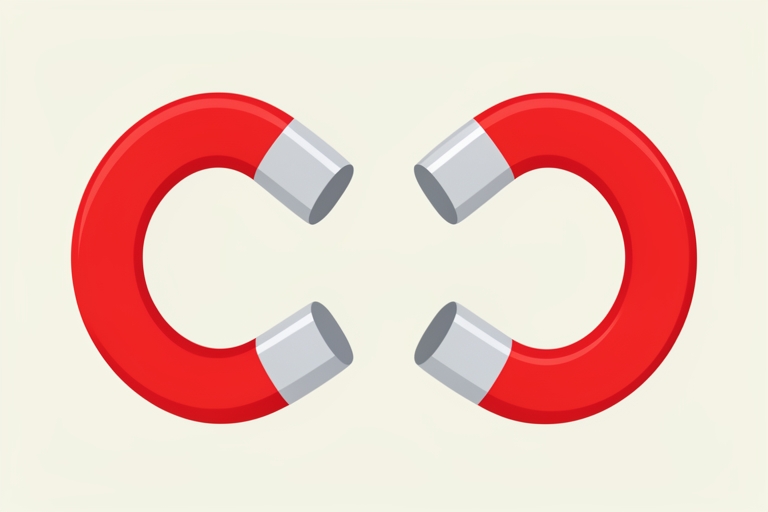

Here is the clever part: when electricity flows through a wire, the wire becomes a magnet too.
- Current makes a magnet
A simple motor has a coil of wire that can spin, sitting between two fixed magnets.
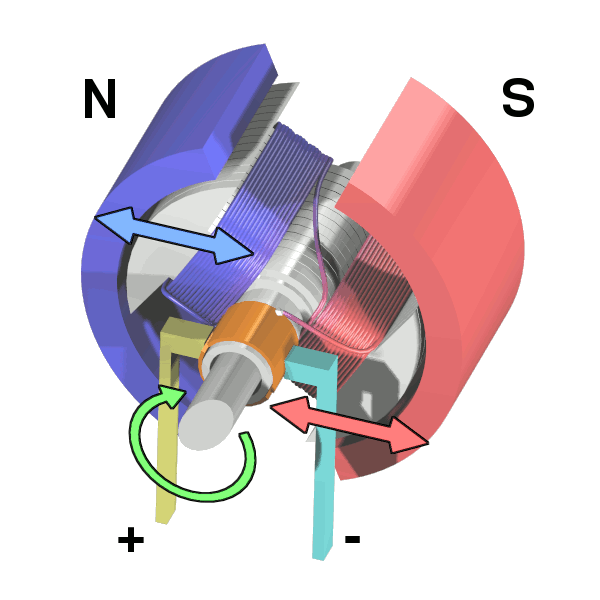
When current flows, the coil becomes a magnet. One side is pushed up and the other side is pulled down. Up on one side and down on the other makes the coil turn, just like turning a steering wheel.
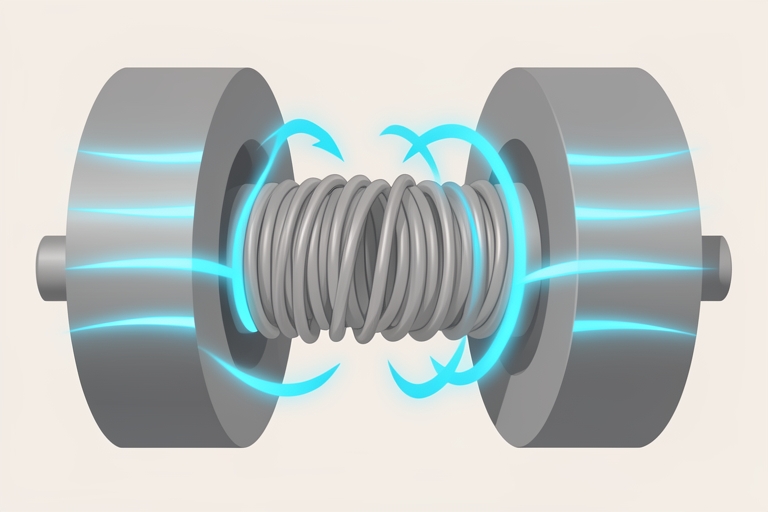
But there is a problem. After half a turn, the push would flip and the coil would get stuck. The fix is a commutator. It flips the current every half turn, so the coil keeps spinning the same way. So the loop is simple: current makes a push, the coil turns, the commutator flips the current, and it repeats.
- Half turn: push flips!
- A commutator and brushes
Example: a toy car. The battery sends current, the motor spins, and gears turn the wheels.
A stronger magnet or more current gives more push, so the motor spins faster and with more power. Quick check time. In short, a motor uses electricity to make a magnet that pushes and pulls, turning energy into spinning movement.
- More current = more power
Quick quiz
Q1. What makes the coil in a motor spin?
Current makes the coil a magnet, and magnets push and pull to turn it.