The ATP synthase motor
Transcript
Inside you, a tiny spinning motor makes your energy.
Imagine a water wheel turned by a river. Your cells have a real wheel, far smaller than a speck of dust.
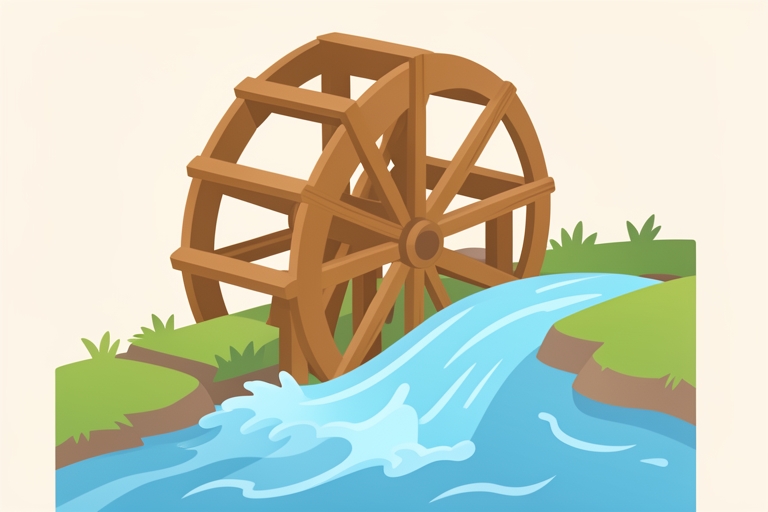

This motor is called ATP synthase. It sits across a membrane, like a turbine in a dam wall.
- Enzyme + molecular machine
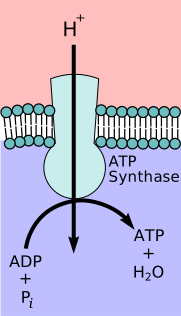
In your cells, it sits in the inner membrane of the mitochondria, the power stations of the cell.
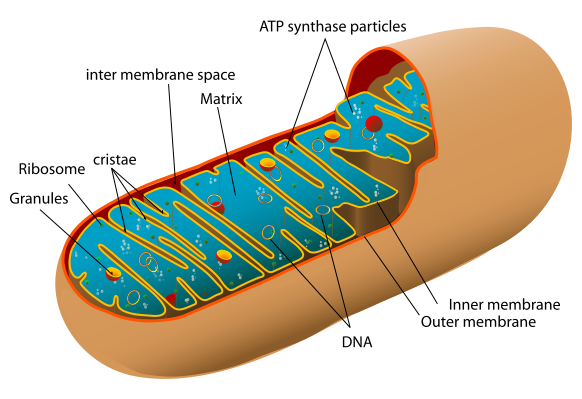
Its job is to join two small pieces, ADP and a phosphate, into ATP, the cell's energy battery.
But what spins the motor? The answer is protons, tiny charged particles pushed to one side of the membrane.

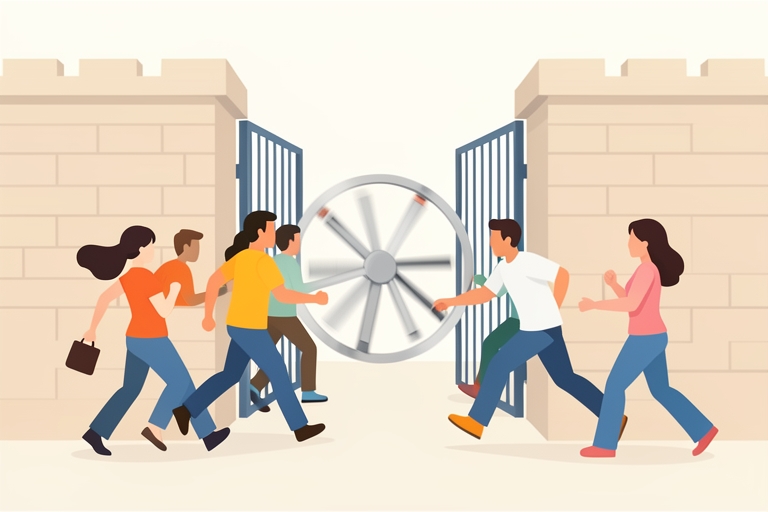
The electron transport chain pumps protons across, so they pile up on one side, like water behind a dam.
The crowded protons want to flow back to the empty side, and the only way is through the motor. As protons squeeze through the lower part, called FO, they turn a ring, just like water turning a wheel.
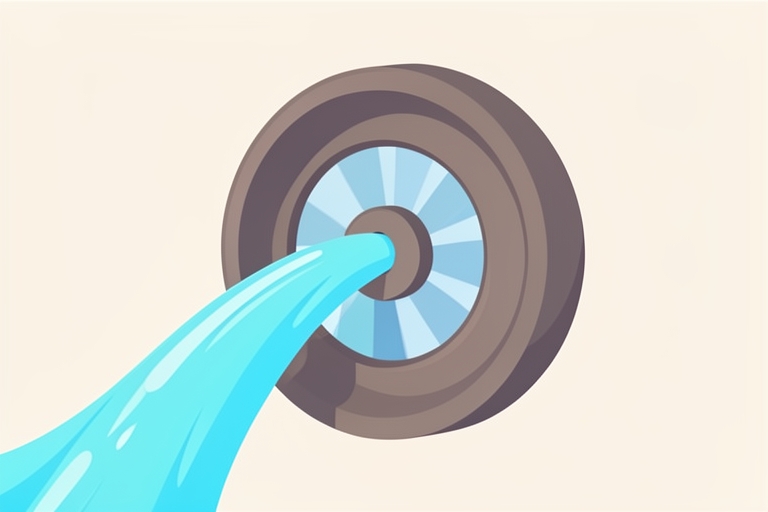

The ring spins a central shaft, and the shaft rotates inside the top part, called F1.
Each turn of the shaft squeezes the F1 head, bending it, and this forces ADP and phosphate to stick together.
One full spin makes three ATP. The motor can spin many times each second, making endless fresh energy. Here is the whole story in one line, flowing from protons to energy.
ADP + P_i \rightarrow ATPQuick check. What makes the ATP synthase motor spin? So, ATP synthase is a tiny motor that uses flowing protons to spin and build ATP, the energy of life.
Quick quiz
Q1. What makes the motor spin?
Protons rushing from the crowded side to the empty side turn the ring.