The Induction Motor
Transcript
How does a motor spin without touching its spinning part?
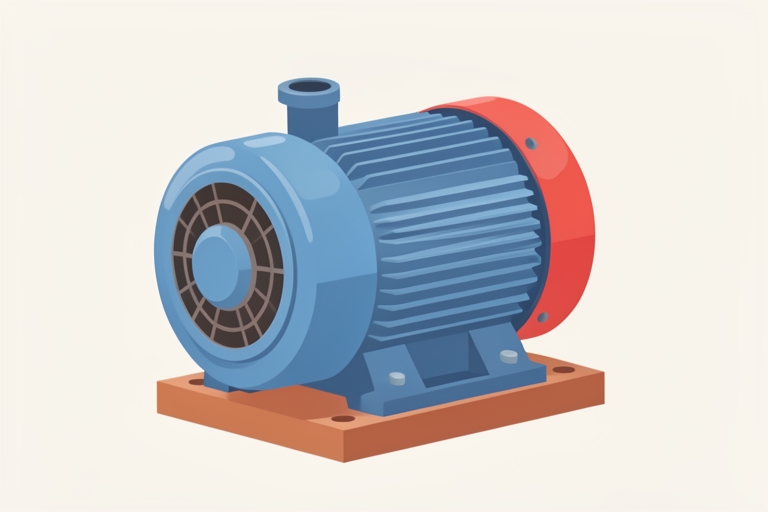
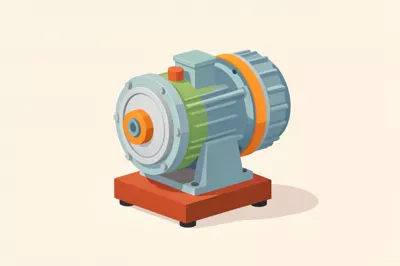
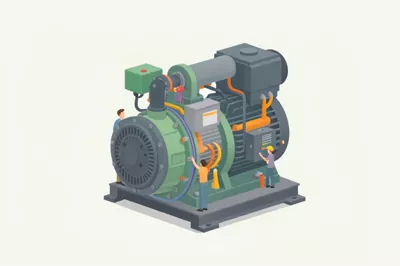
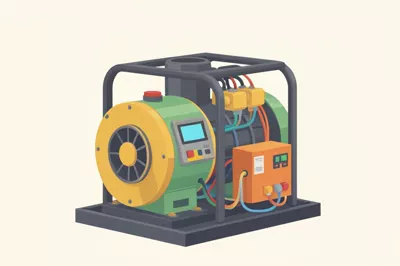
Fans, pumps and factory machines all run on induction motors, and they are everywhere around us.

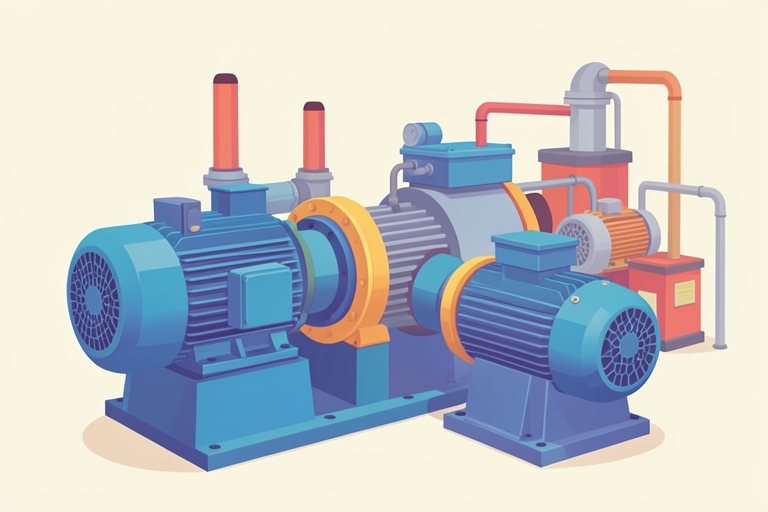
Inside, there are two main parts: a fixed outer part called the stator, and a spinning inner part called the rotor.
- Stator = fixed, Rotor = spins
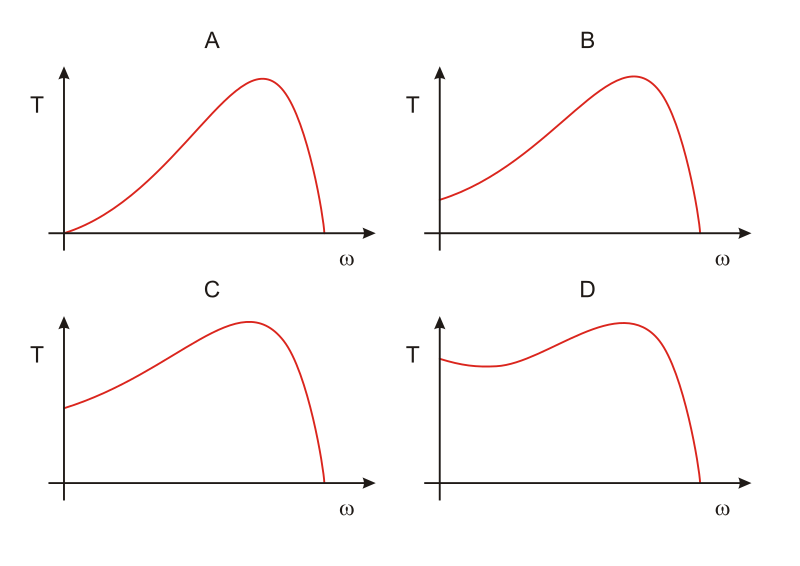
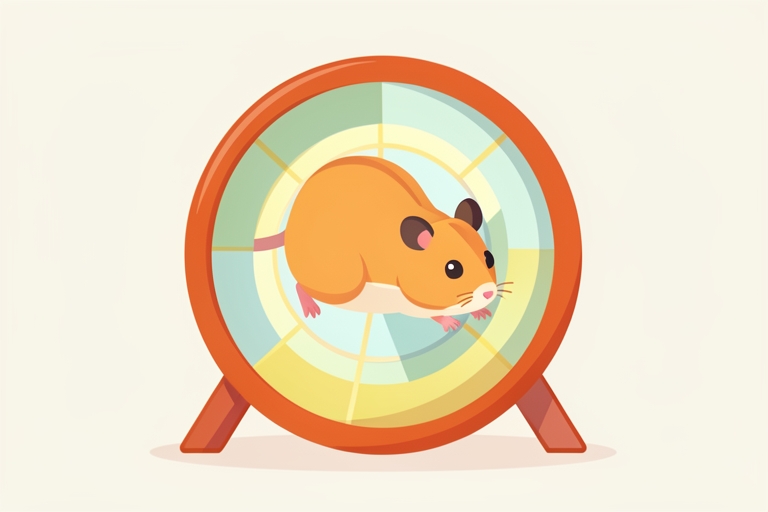
The rotor looks like a hamster wheel made of metal bars, which is why it is called a squirrel cage.
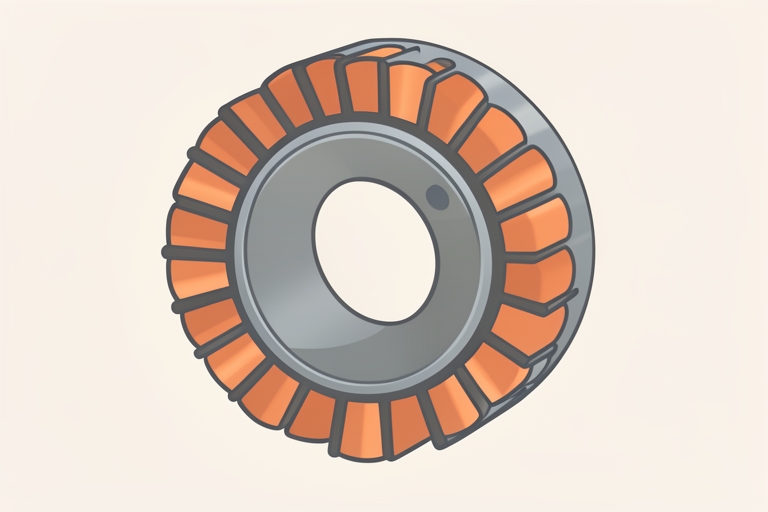
Here is the key point: no wires are connected to the rotor. Only the stator gets electricity.
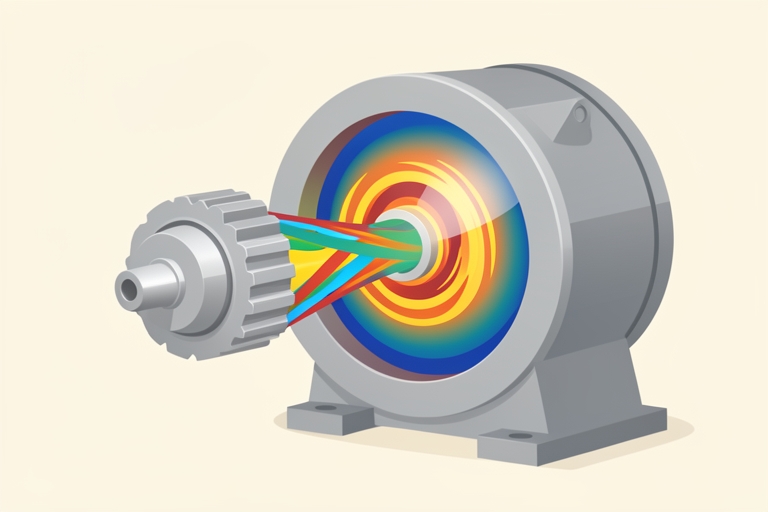
The stator coils get alternating current, and their magnetic field seems to rotate around the stator, like a spinning pattern of lights.

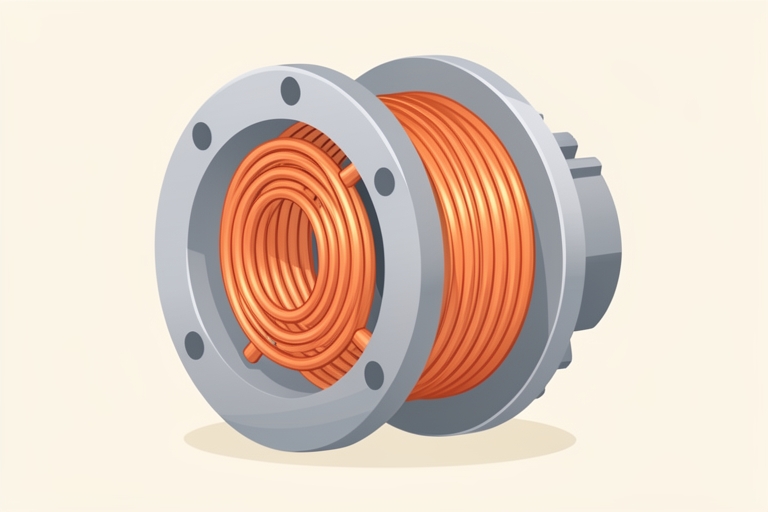
We call this the rotating magnetic field, and its speed depends on the supply frequency.
- f = frequency, P = poles
N_s=\frac{120 f}{P}Now watch the chain of events: the moving field cuts the rotor bars, and that pushes a current into them.
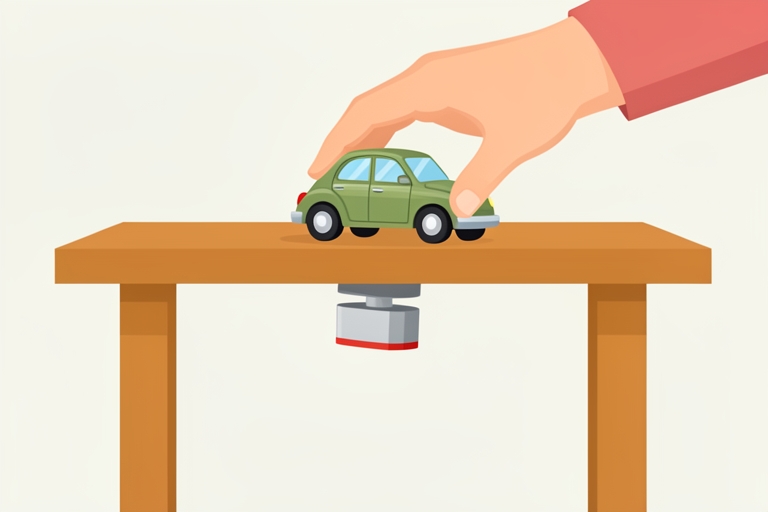
A current sitting in a magnetic field feels a force, so the rotor bars get pushed and the rotor turns. Think of a magnet dragged under a toy car made of metal. The car follows the moving magnet.
- Current in field = force
The rotor always spins a little slower than the field. If it matched the speed, nothing would be induced. That small lag is called slip. Here the field turns at 1500 and the rotor at 1440, so slip is four percent.
- Slower rotor = asynchronous
s=\frac{1500-1440}{1500}=0.04Why are these motors so popular? They are cheap, tough, self-starting, and need no brushes to wear out. Quick check: why must the rotor spin slightly slower than the rotating field? Summary: a rotating stator field induces current in the rotor, which creates force, so the rotor spins just behind the field.
Quick quiz
Q1. Why does the rotor run slower than the field?
Without relative motion, the field cuts no bars and induces no current.