How photosynthesis works
Transcript
How does a leaf turn light and air into sugar?
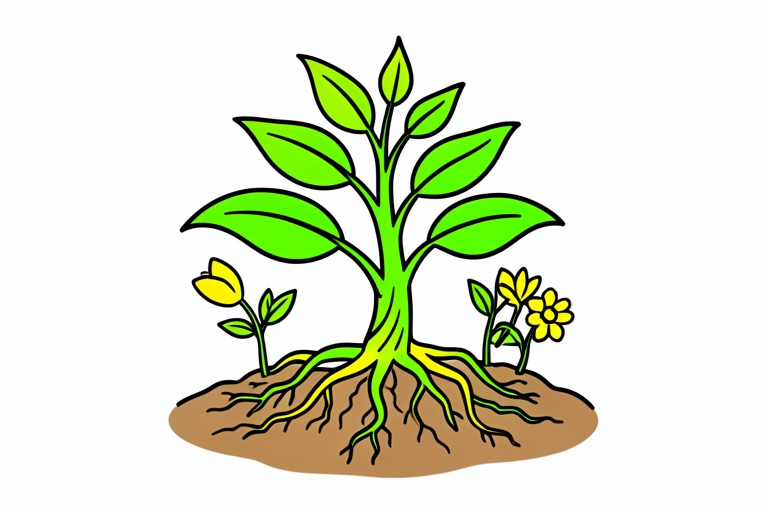
Photosynthesis converts light energy into chemical energy stored in sugar, and it releases oxygen as a byproduct of splitting water.
The overall reaction is six carbon dioxide plus six water, driven by light, giving glucose and six oxygen.
6CO_2+6H_2O \xrightarrow{light} C_6H_{12}O_6+6O_2It all happens in chloroplasts, organelles with stacked membranes called thylakoids, surrounded by a fluid called stroma.
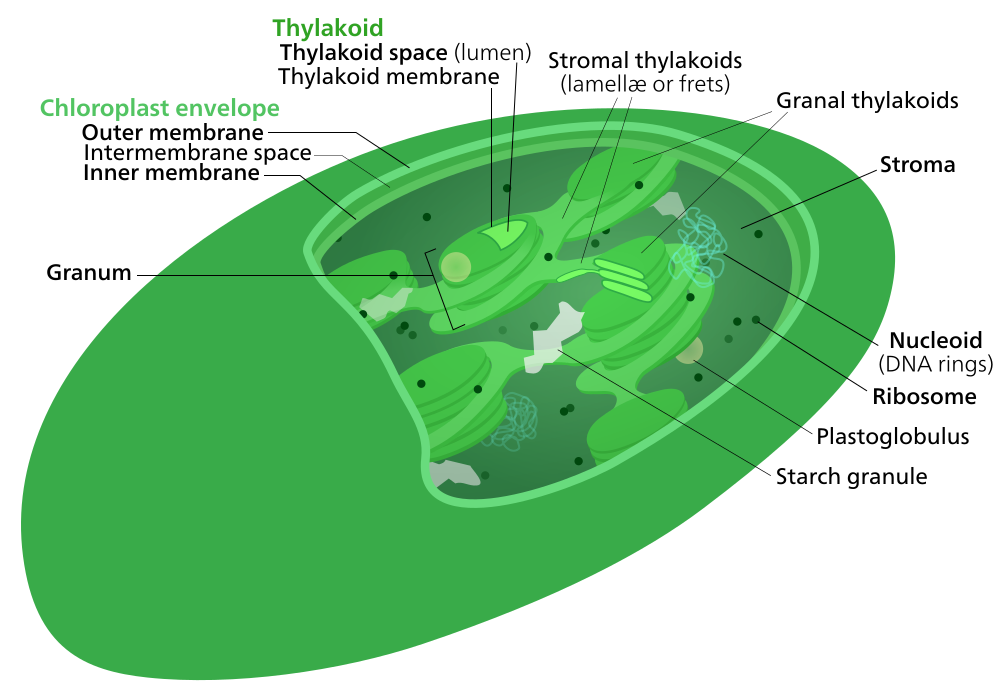
Two stages work as a team: the light reactions in the thylakoid membranes, and the Calvin cycle in the stroma.
Chlorophyll absorbs mostly red and blue light and reflects green, which is why leaves look green. An excited chlorophyll in photosystem two loses an electron, and water is split to replace it, releasing oxygen and hydrogen ions.
- Green light is reflected
2H_2O \rightarrow O_2+4H^++4e^-As electrons flow down the chain, hydrogen ions are pumped into the thylakoid, building a gradient, like water behind a dam.
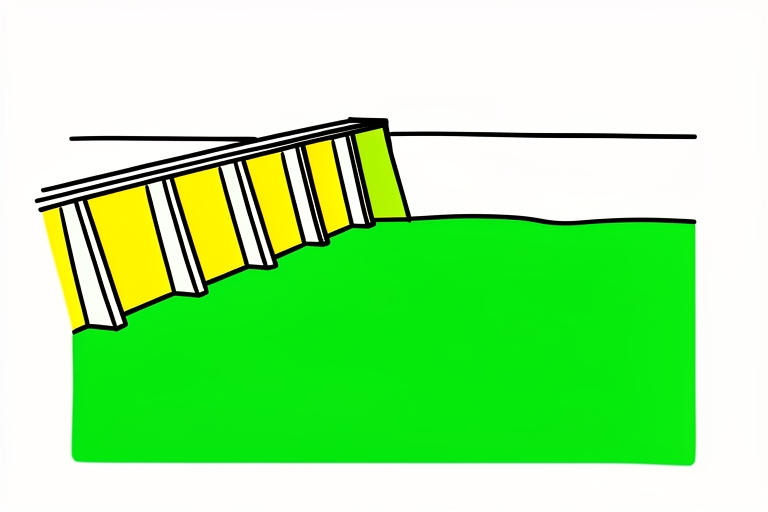
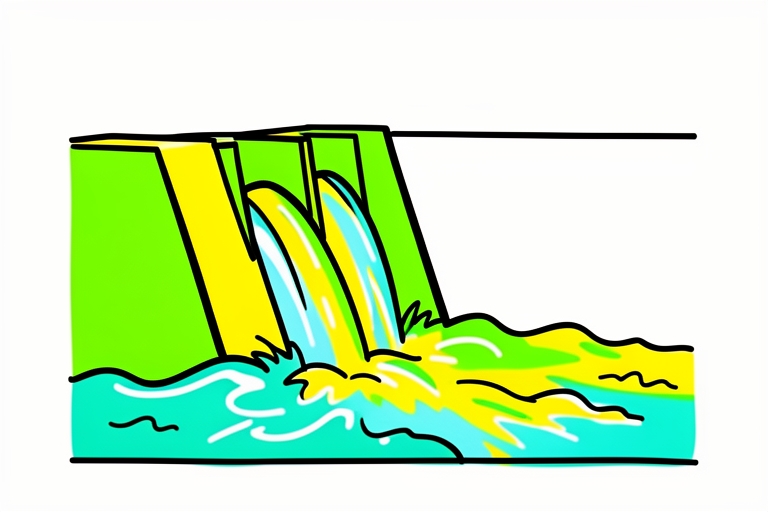
Hydrogen ions rush back out through ATP synthase, and that flow powers the making of ATP. Photosystem one then makes NADPH.
In the Calvin cycle, the enzyme Rubisco attaches carbon dioxide to a five-carbon sugar called RuBP, a step called carbon fixation.
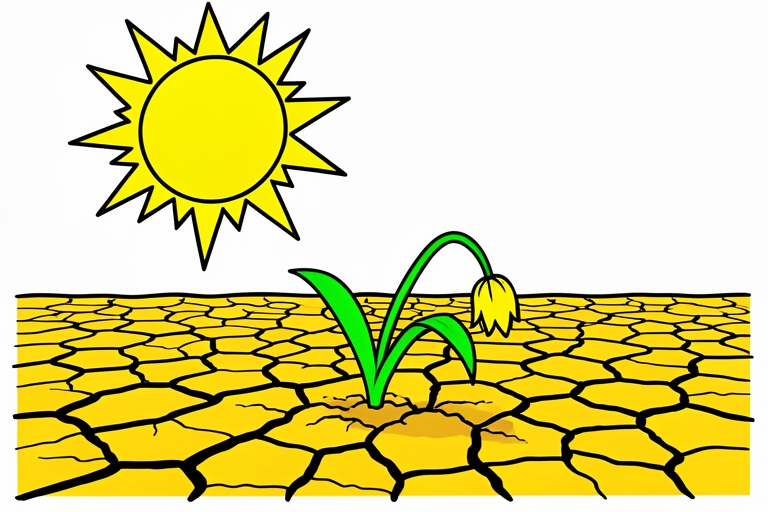
Counting carbons shows why: three carbon dioxide enter, six G3P form, and one leaves as sugar while five regenerate RuBP. Edge case: Rubisco can grab oxygen instead of carbon dioxide, wasting energy in photorespiration, especially when it is hot and dry.

Common misconception: plants get their mass from soil. Really, most of it is carbon from air, plus water.
This links to a bigger idea: photosynthesis fuels food chains and keeps the oxygen in Earth's atmosphere.
Here is a tricky one to test your thinking. In summary, photosynthesis uses light to split water, builds ATP and NADPH, and the Calvin cycle uses them to fix carbon dioxide into sugar.
Quick quiz
Q1. A plant gets only green light. Why does photosynthesis slow down sharply?
Misconception: green has no energy; it carries energy but chlorophyll absorbs little of it.