The Internal Combustion Engine
Transcript
How does burning fuel inside a cylinder push a car forward?

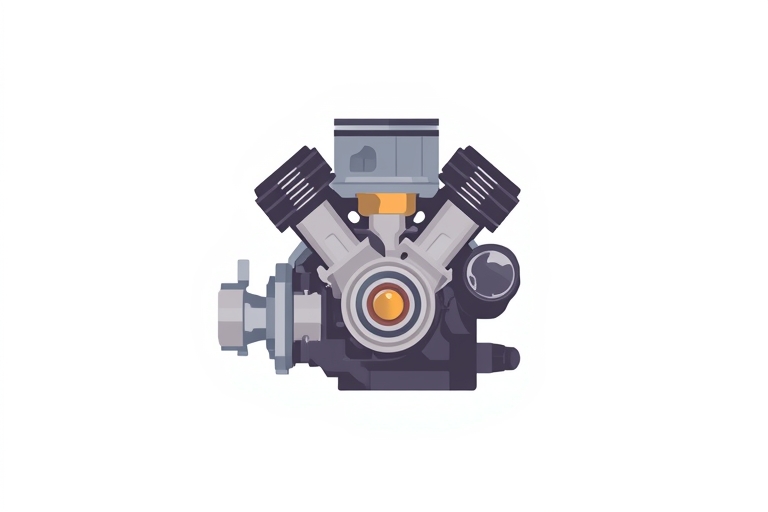
An internal combustion engine, or ICE, burns fuel inside the machine itself, and the hot gas pushes parts directly.
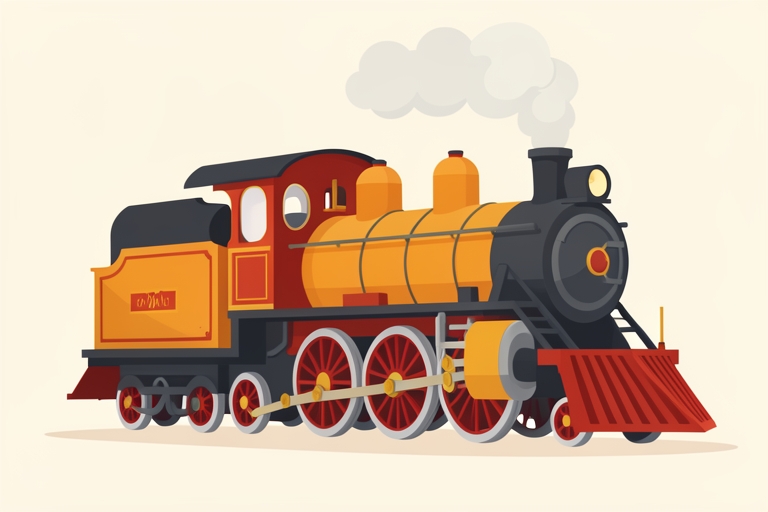
Compare that with a steam engine, where fuel burns outside and heats a separate fluid. Internal means the burning gas is the working fluid.
The first modern one was the Otto engine, designed in 1876 by the German engineer Nicolaus Otto.
Energy converts in a chain: chemical energy in fuel becomes heat, then high pressure gas, then kinetic energy of moving parts. Most piston engines use four strokes, and the piston moves between top and bottom dead centre. Those are its two extreme positions.
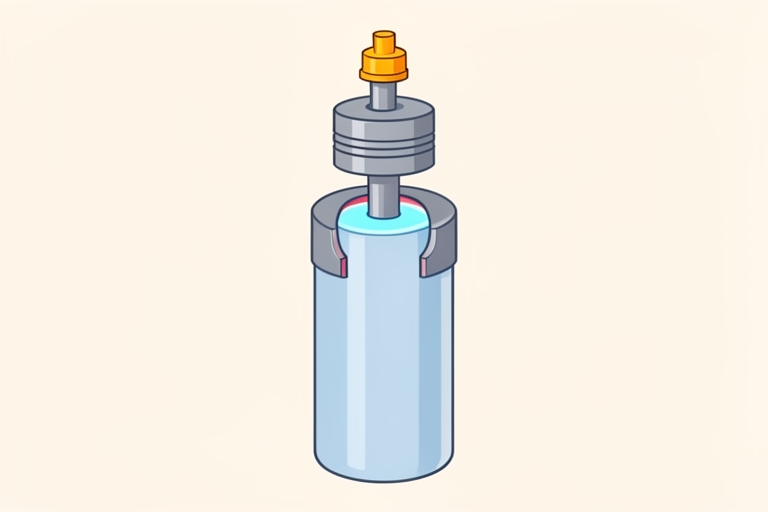
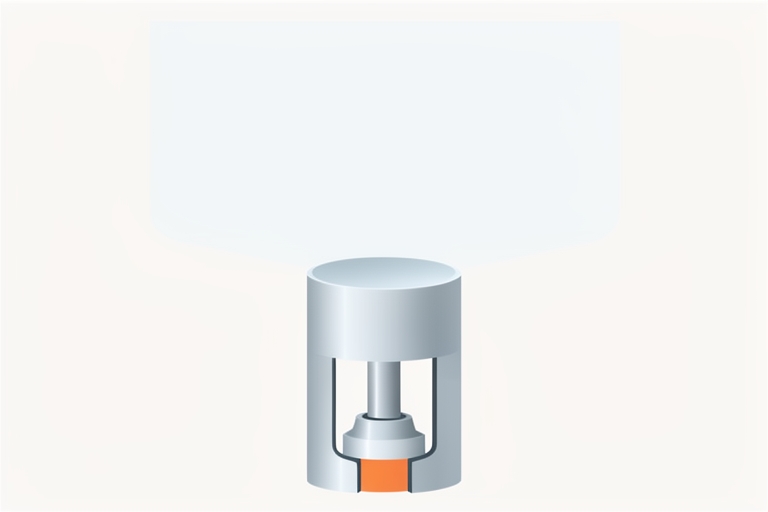
The cycle runs intake, compression, power, then exhaust, and the crankshaft turns twice for each power stroke.
Why does it work? Burning raises gas temperature at nearly constant volume, so pressure jumps, and pressure times area gives force on the piston.
- Pressure pushes piston head
F = P \times AThe ideal gas law explains the jump. At fixed volume, pressure rises in proportion to absolute temperature.
PV = nRTCompressing the mixture first matters. A higher compression ratio means a hotter, denser charge and more work extracted per unit of fuel.
- r = compression ratio
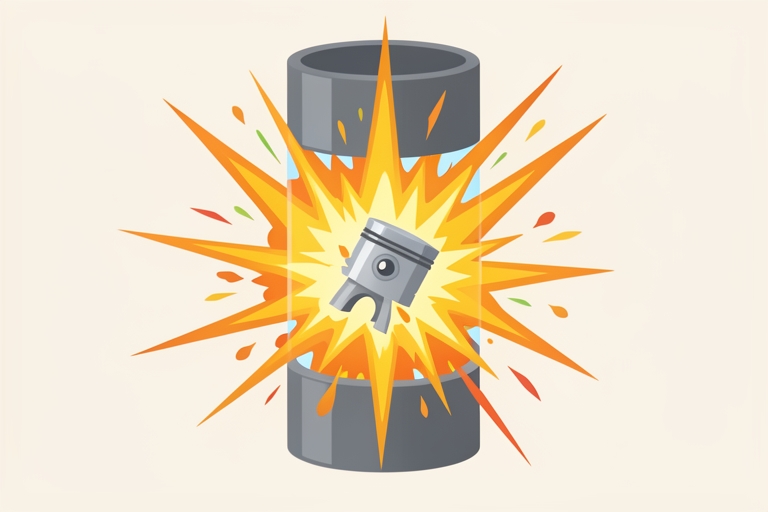
\eta_{Otto} = 1 - \frac{1}{r^{\gamma - 1}}This is the ideal air-standard Otto efficiency. Real engines fall well short, because of heat loss, friction and incomplete combustion. Edge case: raise the ratio too far in a petrol engine and the mixture self-ignites early. That is knock, which can damage the piston.
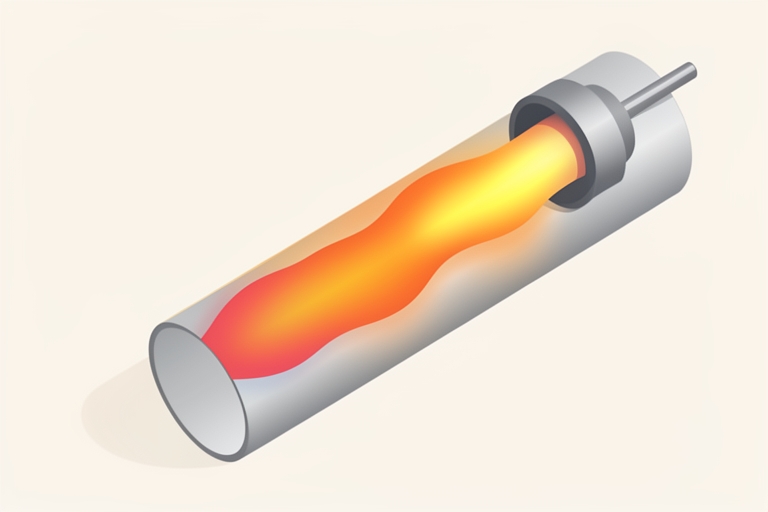
Misconception: engines make energy from fuel. They only convert it, and the second law forces a lot of heat to be rejected. That mind map shows the bigger family. Turbines, jets and most rockets burn fuel continuously, but they too are internal combustion engines. Quick check on the cycle.
Summary: an ICE burns fuel inside its working gas, and pressure from combustion pushes pistons, blades or rotors to turn chemical energy into motion.
Quick quiz
Q1. Why does a four-stroke engine need a compression stroke before the spark?
Compression raises the ratio and efficiency; exhaust removal is a separate stroke, and cooling the fuel is a misconception.